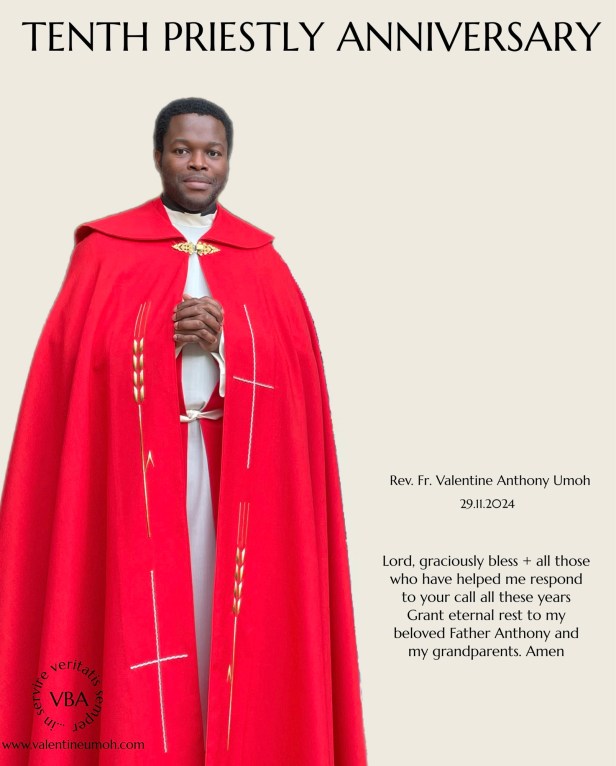
At least since the nineteenth century, there has been an upsurge of a literary genre known as autobiographical writings (autobiographies) with some taking the form of memoirs, an attempt to relive some moments from the author’s memory as regards his childhood, growing up, professional inspirations, aspirations, gains, struggles even including regrets. So many people are also said to have drawn inspiration from other’s autobiography. And so, after a decade (ten years) as a Catholic Priest, this author also pretends to recapture albeit briefly some inspiring and sterling moments in this short trajectory from 2014 – 2024.
It was the Archbishop Fulton J. Sheen who titled one of his works: The Priest is Not His Own (San Francisco: Ignatius Press, 1963). Here among other ideas, the seasoned pastor of souls, highlighted the victimhood aspect of the priestly life. He envisions the priest as a man sacrificing himself in the prolongation of Christ’s incarnation. For whereas pagan religions offered sacrifices to the gods, the priest is himself both priest and victim, as he sacrifices himself, as the ancient priests sacrificed animals and other creatures. This author can confirm this victimhood aspect of the priesthood. A priest lives his life entirely for God and others. He is conditioned by God and others. Without the victimhood, then it is not the Priesthood of Christ.
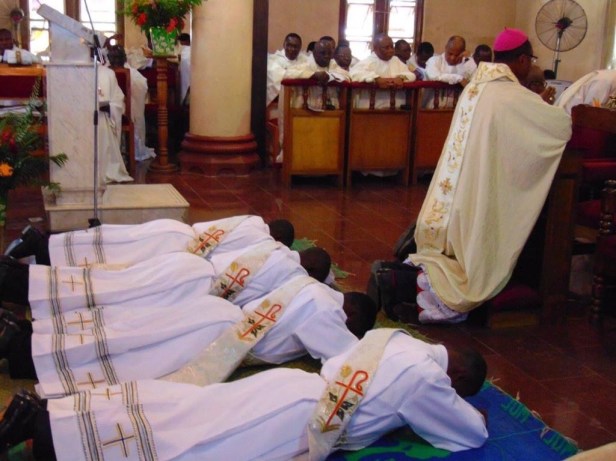
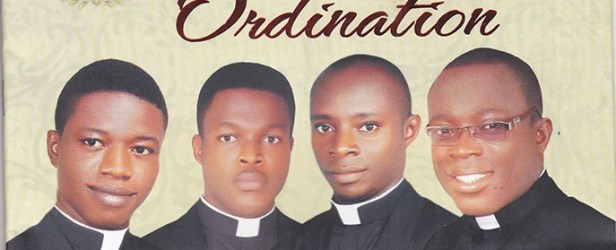
On Saturday, the 29th of November 2014 after 10 years of formation (including one-year spiritual year, four-years of philosophical studies, one-year of pastoral, four-years of theological studies), this author together with three of his classmates received the ordination to the priestly order in the cathedral by the diocesan bishop. Such a solemn celebration always marks the end and beginning. End of the priestly formation process and the beginning of the priestly life and ministry. It is a moment of a definitive yes – a fundamental option (decision) – to offer oneself entirely to God and the Church. Every anniversary of the priest then becomes an opportunity to take stock on how much he has been faithful to this self-offering decision.
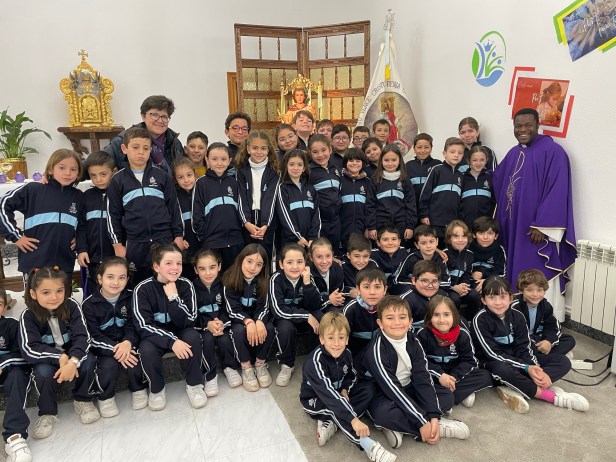
First posting. After ordination, a priest is assigned a place of work (apostolate, mission). Even though one becomes (or rather is ordained) a priest for the entire Church and especially for the particular Church (diocese) or religious order, for a every priest there is a specific assignment (apostolate) and most times with some defined time frame. And for every priest, the first assignment (posting) is always so special and could define the rest of his apostolates over the years. This is what the Spanish people call el primer amor (first love). The reason why the bishop is always very particularly careful in the first assignment of the newly ordained priest considering the individual abilities and circumstances as recommended by the canon law. This author was posted to work as a full-time formator and teacher in one of the diocesan secondary schools (high school) named St. Columbanus Secondary School, Ikwen. It is a Catholic co-educational high school for boys and girls between the ages 10-17. Between January 2015 to July 2017, this author worked in this school not just as a teacher, formator but as a priest, brother and friend. The Principal of the College then assigned him as the Dean of Studies saddled with the responsibility to watched over the academic progress and development of each student. An academic session consists of three terms (First Term: September to December; Second Term: January to April; Third Term: May to July) just like every other secondary school in the Nigerian educational system.

The two and a half years at SCOSSI, a known acronym for this school was pack-filled with activities ranging from academic (intellectual), spiritual, moral (discipline), human cum social and cultural. The over 700 students (boys and girls) were supposed to graduate after six years of formation imbibing the highest academic rectitude, spiritual and moral values as well as human and social virtues necessary for coexistence in the society including love, mutual respect, responsibility, patience, hope, truthfulness, punctuality, humility, faith, devotion, generosity, personal hygiene, commitment and piety. From celebrating the daily Eucharist with the students to begin the day to teaching them in their various classes, this author’s work as a formator was punctuated by timely visits to the students’ dining hall (refectory), the dormitories and the study halls during preps (afternoon and night study periods). Sometimes, you need to also be present during their morning function and the evening manual labour (also called compound cleaning). As a Catholic School based on the finest principles of Catholic Education the daily routine is almost modelled after that of a Minor Seminary. There were days for games including football, volleyball, basketball, tennis (Mondays, Wednesdays, Fridays, Saturdays and Sundays), social nights (every last Saturday), Sanitation (Inspection), Visiting Days, and Manual Labour (Tuesdays, Thursdays and Saturdays). Sporting, Academic, Cultural events and competitions were always organized periodically to prepare the students for the tasks post-high school.
Within these years, this author also taught Introduction to Philosophy to the Seminarians of St. Anthony of Padua Spiritual Year Seminary, a place where Ikot Ekpene Diocesan candidates to the Major Seminary are carefully prepared for a period of one year. Successful students are invested with the clerical soutane in a solemn ceremony always presided by the Diocesan Bishop. With the Investiture, the new senior seminarians begin their journey to the Catholic Priesthood in their assigned Major Seminaries in the next academic year (which always begins on October). Ikot Ekpene Diocesan Seminarians are traditionally formed in three Major Seminaries including St. Joseph Major Seminary, Ikot Ekpene, Seat of Wisdom Seminary, Owerri and Bigard Memorial Seminary, Enugu. It was interesting and satisfying to take up a teaching appointment on Philosophy after bagging a Bachelors in Philosophy (B. Phil) in 2009.
This author was also appointed by the Diocesan Bishop as Chaplain II to the Ikot Ekpene Diocesan Catholic Youths Organization of Nigeria (CYON). As Chaplain II, the work was basically that of pastoral guidance and animation of the activities of the diocesan youths. The CYON is an umbrella organization for all the young Catholics in Nigeria. It is recommended for all Catholics who have not completed 35 years of age. Although there are many other youth groups and movements such as the Catholic Boys Association, Catholic Girls Association, Maria Goretti Society, Altar Servers Guild, Holy Childhood and Nigeria Federation of Catholic Students (NFCS), these do not interfere in any way with the activities of the CYON and vice-versa. The Nigerian Church still boasts of a great number of young and practicing Catholics who believe that they too are missionaries and evangelizers especially in this modern society. The various youth groups and movements thus serve as avenue of pastoral and spiritual formation for our youths. They are indeed a great treasure to the Church in Nigeria. The vibrancy of The Diocesan/Parish Choirs as well as the Lay Readers (Lectors guild) Association over the years is thanks to the youth population in these Church groups. Working with the Diocesan Youths although very short-lived was for this author a very enriching and enlightening apostolate. When you work with young people, it makes you younger still. And for one who already has a rectitude for such apostolate, it was such a gracious gift for which he is eternally grateful.
Postgraduate studies. This author was recommended and sent for postgraduate studies in Biblical Theology by his Diocesan Bishop. As such, after a two and a half years apostolate in a secondary school, he was sent back to the books. This entailed learning a lot of new things and a very quick adaptation strategy and mindset including language, environment, culture and people. The first draft of the author’s new volume – My Experience: A personal journal of life in Spain, which was completed earlier this year is expected to be ready for publication sometime next year. It will catalogue in literary narrative the events and situations spanning his period of studies outside his country.
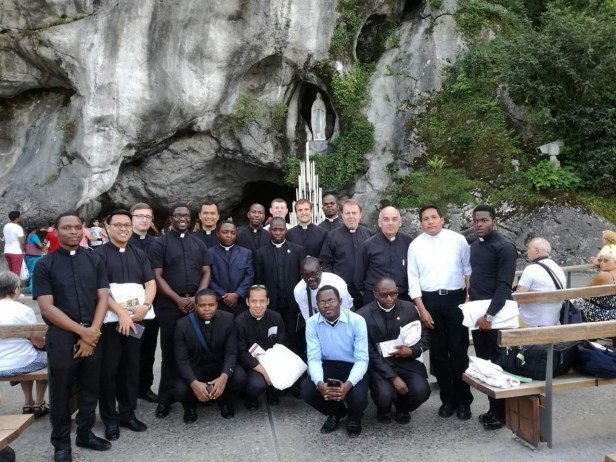
Running for lectures for five days in a week with each day having at least three period of lectures is what characterized this author’s experience at least for two years (corresponding to the licentiate studies). To arrive for the first class, you should not miss the bus that takes off at 8.00h. The next bus comes in 15 or sometimes 20 minutes. If you miss the 8.30h bus then you may well accept going late for the first lecture. It takes about a 45mins bus drive with one change over to get to the Faculty. A full day lecture period started at 9.30h and ended by 13.50h. It was a total of five lectures each day. The first semester was pack-filled with just two free lecture periods in a week. The school academic session consisted of two semesters (September to December and January to May). December and May were examinations periods. If there is anything that fascinated this author during this period was the commitment of the lecturers. The lectures were student oriented and each lecturer was interested to know if the students were following and understanding what they were teaching. So, it got to this author loud and clear that the first objective of teaching is for the students to comprehend. If this comprehension is not achievable, then teaching did not take place.
It was a multi-national class: two Nigerians (including this author), a Cameroonian, a Ugandan, a Mexican, a Brazilian, a Spaniard, a Nicaraguan. There was also a Colombian and a Canadian who took some of our courses (part-time). The college residence was a universal Church in miniature. With about 30 students (priests) – we had priests from Ecuador, Colombia, Poland, Mexico, Venezuela, China, Tanzania, Nigeria, Uganda, Kenya, Cameroon, Equatorial Guinea, Brazil, Cote d’Ivoire, Peru, Indonesia, Congo DPR, Philippines, Bolivia, Panama etc. There were at least six different college residences for priests studying in the university. The Ecclesiastical Faculties (Theology, Canon Law and Philosophy) of the University had at least 120 priests studying there.

Living and studying with people of different cultural backgrounds in a very different and new environment can be edifying yet it could also be very challenging. You will need to be open minded to digest such cultural differences in order to build some interpersonal relationship at least for the sake of coexistence in the university lecture halls and in the college residence. Friday evenings were set aside for games including football, tennis, basketball and volleyball in the university sport arena. These were important moments to socialize and fraternize with other priests of the university including those in the other residences and other faculties. Shortly before the exams there were also moments for get-together both at the departmental level and the residence level. These happened at least twice a year – before Christmas (November/December) and sometime in April/May, to end the academic year, as well as say goodbye to those graduating.

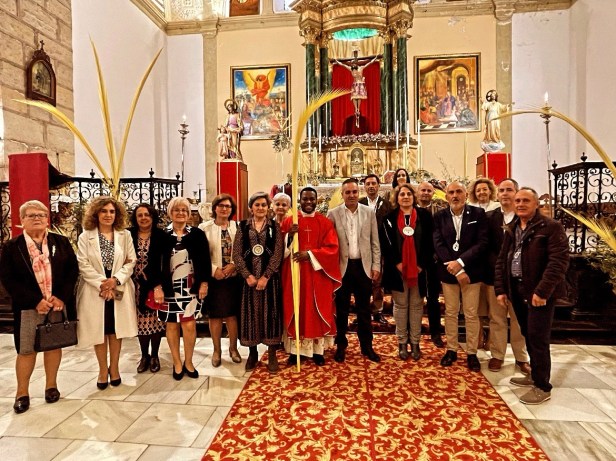
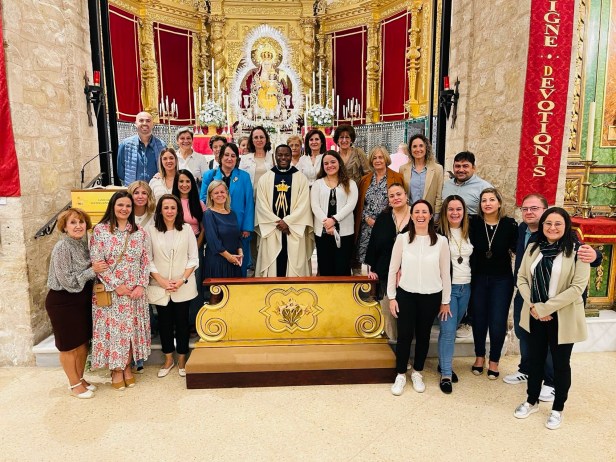
Pastoral experiences. After two years of full-time studies, this author was accepted for some pastoral collaboration and experience in one of the southern dioceses – Jaén – thanks to the recommendation of his Diocesan Bishop. Although in the intervals of the two-year studies he had had the opportunity to help out in the various parishes across many dioceses including Huelva, Getafe, Segorbe-Castellón, Alcala de Henares and Murcia during the Holy Week and Summer holidays, this was the first official pastoral assignment outside his home diocese. It was during this period that this author could confirm personally the great gap of difference in the life of a priest between pastoral and academic. It is one thing to live in a college residence going to lectures every-day without any pastoral engagement and another to live in a parish house, attending to some pastoral needs while still engaging in some studies. At least for the next four years, this was the lot of this author who since his acceptance into the diocese have received three different postings (nombramientos), working either as pastor or assistant pastor in five different parishes (parroquias) and cities (pueblos) including Jaén Capital, Villacarrillo, Mogón, Villanueva del Arzobispo and Iznatoraf. All within the southern province and diocese of Jaén.

Publications. This author already has seven books to his collection plus several articles in academic journals and magazines including “The Charism of Teaching and the Dialogue Between Evangelization, Mission and Culture (Pauline Perspectives)” in African Journal of Contextual Theology (2023),The Gift of Διδασκαλἰα in Pauline Writings (2023), Essays in Biblical Studies (2021), That they may have life (co-editor 2021), Inspiring Hope: Tales from my fatherland (2021), Rejecting an emerging Culture of Indifference: Responding to the Needs of our brothers (2021), A Critical Assessment of Mission Approach in Nigeria (2020), Birth Control: What the Church teaches (2020). He also has about 35 research items on ResearchGate. You can get these books on Amazon.https://www.amazon.com/author/valentineumoh

Gratitude. Ten years in the Lord’s vineyard as a Catholic priest is quite a milestone. When one looks back, ten years ago really looked like yesterday, yet indeed a lot of water has passed under the bridge. This author is eternally grateful to God for finding him worthy for such a sacred ministry in spite of his imperfections and shortcomings. He is grateful to his Diocesan Bishop for the confidence reposed on him over these years. He is also thankful to the Bishop of Jaén (former and current) for engaging him pastorally in the diocese. He thanks his parents, siblings, relatives and friends for their show of love, care and concern all these years. All his teachers, lecturers, professors and formators in all the strata of academic formation are hereby acknowledged with gratitude. He is grateful to all his students and parishioners for the moments they shared together working with and among them. He is forever grateful to all those who have accompanied him these ten years by extending some hand of friendship and support along the way.

Oh, the future lies before me,
And I know not where I’ll be,
But where’er my path be leading,
Saviour, keep my heart with thee.
Jennie Stout
And I try every day, to be all that I had imagined.
And I find that life always has something in store for me
That surpasses any of my fantasies
Nothing compared to what really happened
Xoel López “Tierra” translated from Spanish

This author is Valentine Anthony Umoh, ordained a Catholic Priest for Ikot Ekpene Diocese, Nigeria on November 29th 2014 by Most Rev. Camillus Raymond Umoh, the Catholic Bishop of Ikot Ekpene at St. Anne Cathedral, Ifuho, together with his classmates Isidore Isidore Uko, Joseph Oliver Sandy and Michael Fidelis Archibong. Today, the 29th November 2024 marks their tenth priestly anniversary. The above autobiographical is a rough attempt to capture the major highlights in the author’s trajectory these ten years. Remember to say a prayer for us today so that we may be Christlike through the years.
Non nobis, Domine, non nobis, sed nomini tuo da gloriam (Psalm 113:9)


2 responses to “A Decade as a Catholic Priest: Non Nobis Domine”
What a journey so far, Praying for more Grace to God’s commitment 🙏.
LikeLike
Thank you very much! We thank for his grace made suficient in us. And we look to the future with renewed confidence. Remain blessed!
LikeLike