
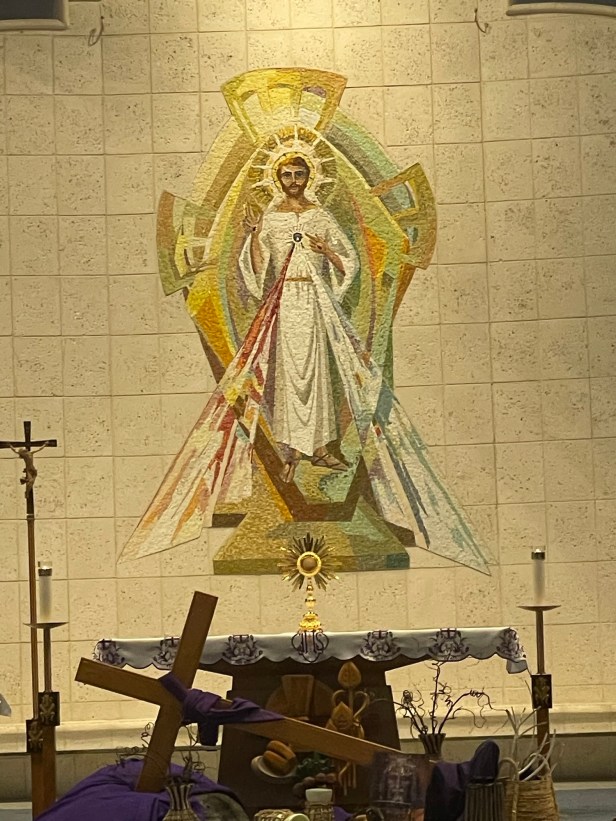
Heal our blindness, Lord
1Sam 16:1. 6-13; Psalm 22; Eph 5:8-14; Jn 9:1-41
As an old and experienced judge who had studied how the first king (Saul) had failed, Samuel had his own ideas about whom God would choose. But God chose the most unlikely candidate, namely, David, the shepherd boy, the youngest son of Jesse. The reason He gave Samuel for this choice was: “Not as man sees does God see, because man sees the appearance, but the Lord looks into the heart.” It also reminds us that those whom God involves in His saving plans are not necessarily those whom the world perceives as great. It also illustrates how blind we are in our judgments and how much we need God’s help.
In the early Greek-speaking Church, Baptism came to be known as photismos meaning “an illumination or bath in light.” Paul writing to one of these Churches, in this case, to the Ephesians reminds Christians of their new responsibility as children of light: “You were once darkness, but now you are light in the Lord. Live as children of the light, for light produces every kind of goodness and righteousness and truth. Try to learn what is pleasing to the Lord.”
Isaiah prophesied, and the Jewish people of that era believed, that when the Messiah comes, he would heal blindness and other diseases. The type of blindness which we now call ophthalmic conjunctivitis was very common in Biblical times. Jesus gave to the beggar who was born blind not only his bodily eyesight but also the light of Faith. This story also shows how the stubborn pride and prejudice of the Pharisees prevented them from seeing in the humble “Son of Man” the long-expected Messiah, and that made them incapable of recognizing the miracle.
Jesus’ giving of sight to a blind man, teaches us the necessity of our having our spiritual and mental eyes opened by Faith and warns us that those who assume they see the truth are often blind, while those who acknowledge their blindness are given clear vision. In it unfortunate, that the most unlikely person, namely the beggar born blind, receives the light of Faith in Jesus, while the religion-oriented, law-educated Pharisees remain spiritually blind. “There are none so blind, as those who will not see.” To live as a Christian is to see, to have continually growing and deepening clearer vision about God, about ourselves and about others. We are reminded that we are to live as children of the light, seeking what is good and right, true and beautiful.
The healed beggar begins by identifying Jesus as “a man.” Questioned further by the Pharisees, he declares that the man who healed him is a Prophet. When the parents of the blind man convinced them that their son had been born blind, the Pharisees argued that the healer was a “sinner,” because the miracle had been performed on the Sabbath. But the cured man insisted that Jesus, his healer, must be a man from God, and they excommunicated him from Temple worship. When Jesus heard this, He sought and found the man He had healed, and asked him, “Do you believe in the Son of Man?” the man answered, “Who is he, sir, that I may believe in him?” In response to Jesus,’ “You have seen Him, and the One speaking with you is He,” the now-sighted man said, “… ‘I do believe, Lord,’ and he worshipped Him.”
We have already been washed in the waters of baptism. Our blindness is not permanent for our eyes have already been opened, but like the parents of this man, we are afraid. Throughout our lives we become afraid and very often ashamed of professing Christ not only as the source of our light but as the light itself – and still the Lord touches us and heals us again and again. As the blind man, we also need to go through a conversion process that leads us to recognize Christ as Lord and God.
In our lives we are called to be disciples, people who continue the ministry of the Lord, a ministry of forgiveness and reconciliation and healing. We are the ones who beg for light again and again, but we are also the ones who are called to see the Lord in those who are rejected, and oppressed. As the blind man, we are called to perceive life with a new light and a new hope. We are called to understand that life is more than asking trivial questions like “who was the one who mixed saliva and mud and cured on the Sabbath?” As the blind man, we are called to pay attention to what really matters: “I was blind but now I see.” As people of faith, we cannot live in darkness, blind to the expressions of goodness, unable to enjoy that another human being is able to see.
History is littered with so many people who overcame physical disabilities and challenges including blindness and still made their mark. The Lenten season challenges us to reflect on those obstacles, which tend to stunt our spiritual development. Like the blind man in today’s Gospel, we are also capable of overcoming whatever stands between us and the wholeness to which God calls us. As we continue with our Lenten journey, may we have the courage to look into our own hearts and ask the Lord to purify our eyes so that we also become light in the midst of blind hate, violence and exclusion. May our Lenten prayers and sacrifices serve to heal our blindness so that we can look at others, see them as children of God, and love them as our own brothers and sisters.
Even in our blindness, God our good shepherd never abandons us, for in the words of the Psalmist; “even though I walk in the dark valley, I fear no evil; for You are at my side with Your rod and Your staff that give me courage.” We also sing the song of St. John Henry Cardinal Newman: “Lead, kindly Light, amid th’encircling gloom, Lead Thou me on; The night is dark, and I am far from home; Lead thou me on: Keep Thou my feet; I do not ask to see: the distant scene — one step enough for me.” May the God of Light to lead us from darkness to light, from confusion to certainty, and from sickness to health. Amen.
 VU_BIBLIA ACADEMIA