
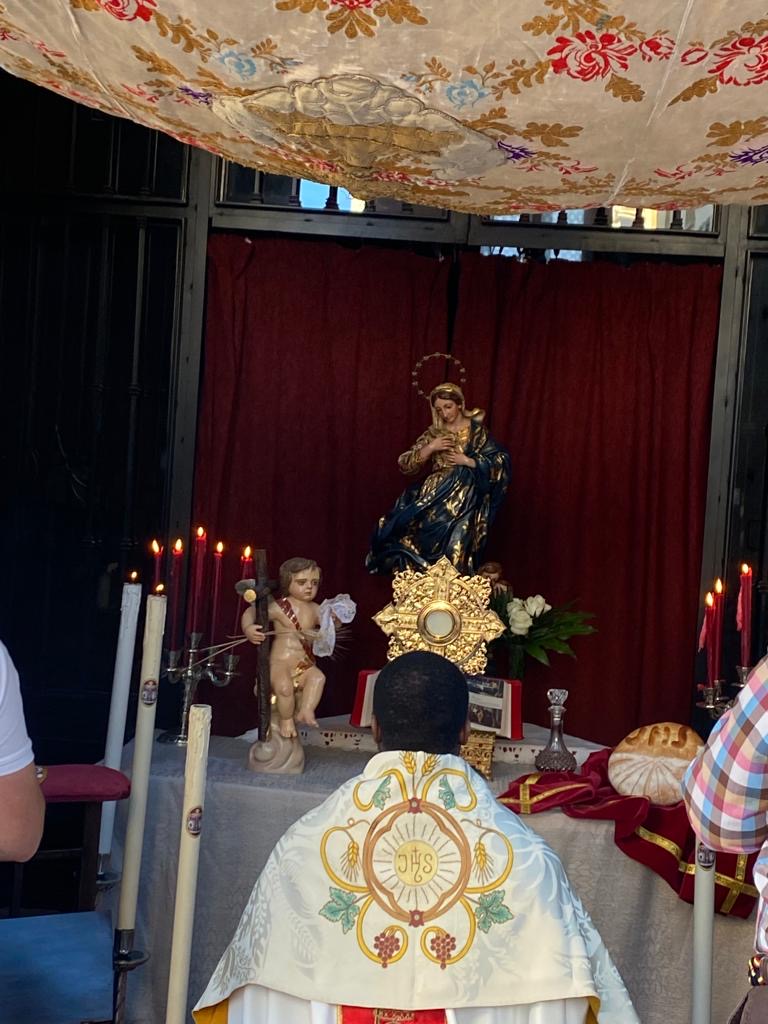
The Institution of the Eucharist
At the Last Supper, Jesus did more than share a meal, He instituted the Sacrament of the Eucharist, the New Covenant sacrifice, fulfilling and transforming the Jewish Passover.
Fulfilment of the Passover
The Last Supper occurred during Passover, when Jews remembered their deliverance from Egypt (Exodus 12). In the original Passover, the Israelites were saved by the sacrificial lamb’s blood on their doorposts. Jesus, the true Paschal Lamb, offers His Body and Blood as the new and perfect sacrifice for the salvation of the world (1Corinthians 5:7).
Real Presence: Christ’s Body and Blood
The Catholic Church teaches transubstantiation, meaning that the substance of bread and wine truly becomes the Body and Blood of Christ, while the appearances remain the same. This is not symbolic; Christ is truly, really, and substantially present. Early Church Fathers, including St. Ignatius of Antioch (Ist century), affirmed this belief.
A New and Everlasting Covenant
Jesus’ words, “This is My Blood of the covenant,” echo Exodus 24:8, where Moses sealed the Old Covenant with sacrificial blood. At the Last Supper, Jesus established the New Covenant, sealed with His own Blood, fulfilling Jeremiah 31:31-34.
The Eucharist as Sacrifice and Communion
The Eucharist is both:
1. A Sacrifice:
It makes present Christ’s one, perfect sacrifice on the Cross (Hebrews 10:10-14). The Mass is not a new sacrifice but a participation in the one Sacrifice of Calvary, re-presented in an unbloody manner.
2. A Communion with Christ:
Jesus gives Himself to us so that we may be united with Him (John 6:56). The Eucharist nourishes our souls and strengthens us in grace.
Application in Christian Life
Participating in the Eucharist deepens our union with Christ’s Passion and strengthens our spiritual life. Receiving the Eucharist worthily requires confession if one is in mortal sin (1 Corinthians 11:27-29). Living Eucharistically means offering ourselves as a spiritual sacrifice in daily life (Romans 12:1).
 VU_BIBLIA ACADEMIA